We’re saying goodbye to Coimbra today, this brilliant, bustling burg we’ve been crushing on. At this point, having barely scratched the surface, our attraction is a matter of chemistry – but when you know, you know, and we both long ago learned to trust in first impressions. We’d only booked four days here – not nearly enough, but I guess it’s always good to leave them wanting more (it’s just hard when you’re the ‘them‘).
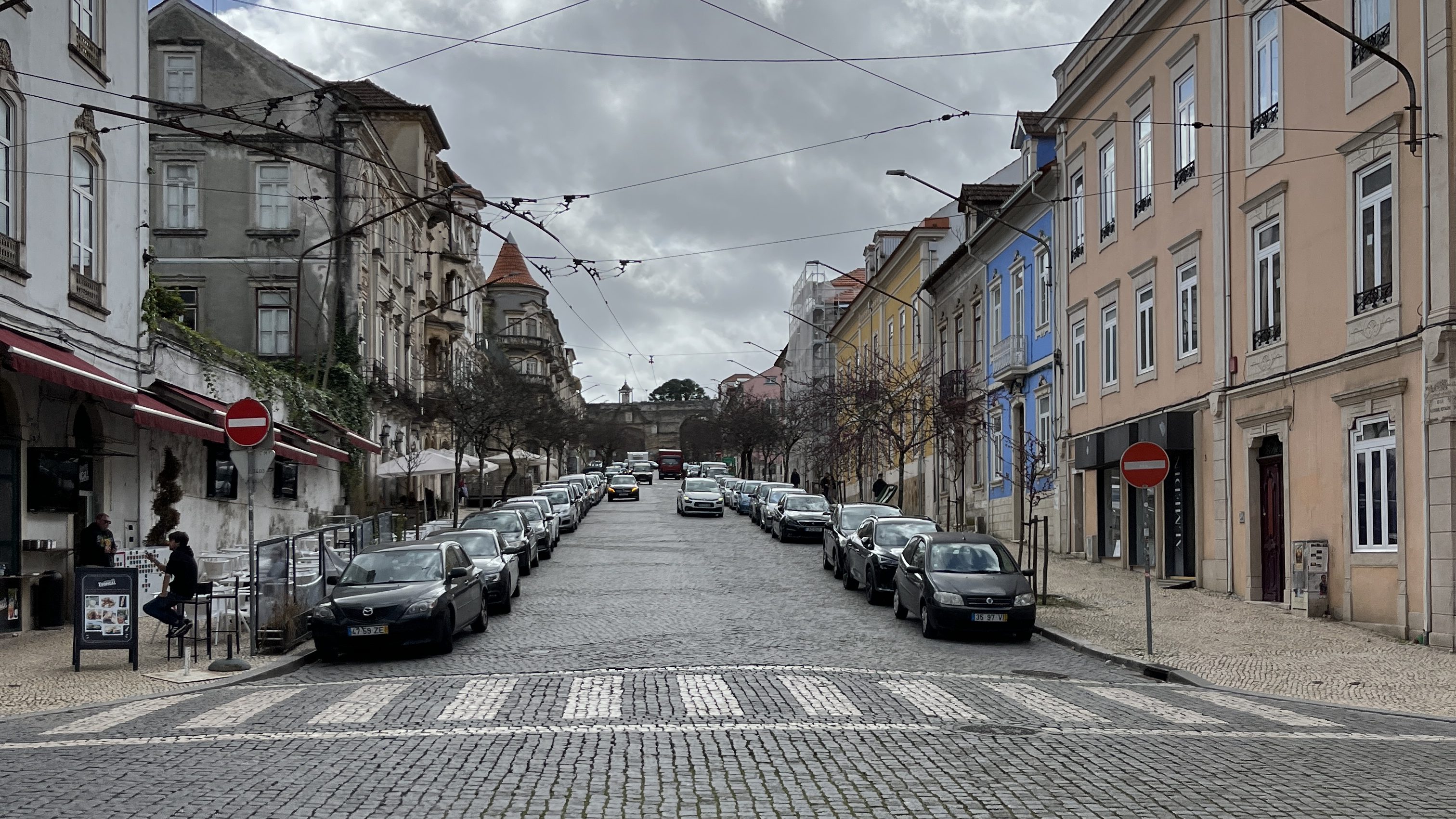
The day before and the vacation from the vacation
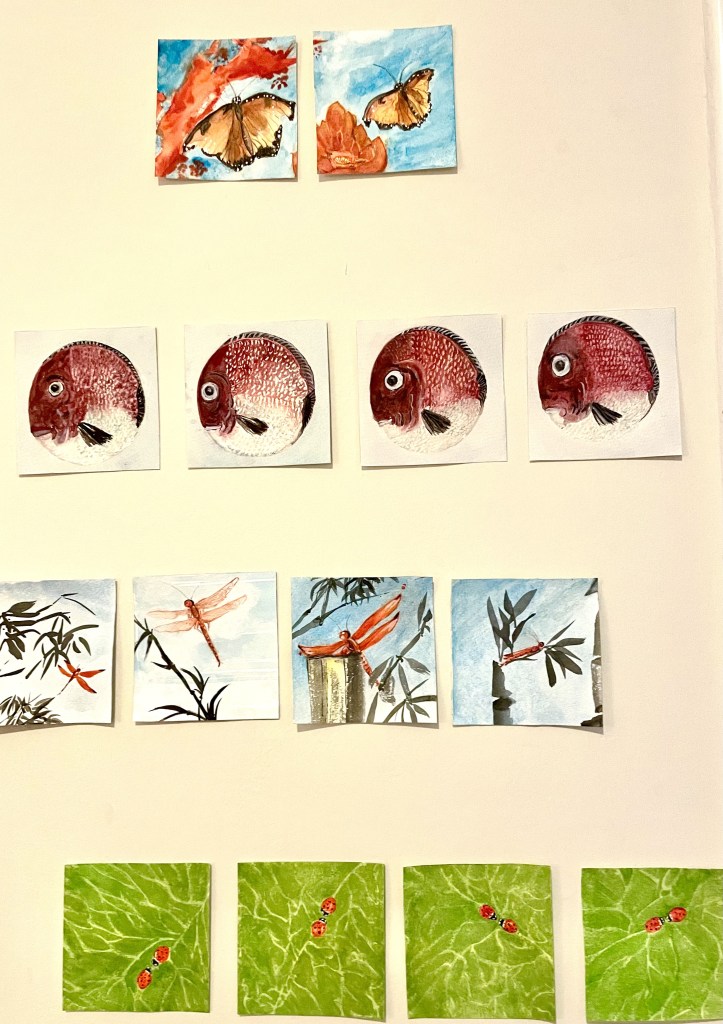
Yesterday was a bit of a non-vacation day for us – we hardly left the flat. Stasia channeled the beautiful sunny weather in through the generous flat windows and used it to paint. She’s been keeping up with her daily ‘365’ project and we’re both pleased as pomegranates with the results – this session bringing kissing ladybugs along Sumi-é butterflies and bamboo stalks.
Like a local
Having run out of clean clothes, I google a route and haul the week’s dirty duds to the local suds-parlor via my giant suitcase backpack.

The laundromat, I am excited (but not surprised) to learn, is on a steep hill in the student quarter. I’ve come to love hills – whether in a Marin mountain marathon or a Lusidian laundry load. They’re true and honest – an opinion I’ve carried since reading that one of the best ways to learn your natural proper running form is to observe your biomechanics while running uphill. Another vote for hills is the prize at the top – there’s going to be some interesting view or in the case of ye olde days, a solid vantage point for smiting your enemies. There’s something for everyone.
Have some joy, it’s free!
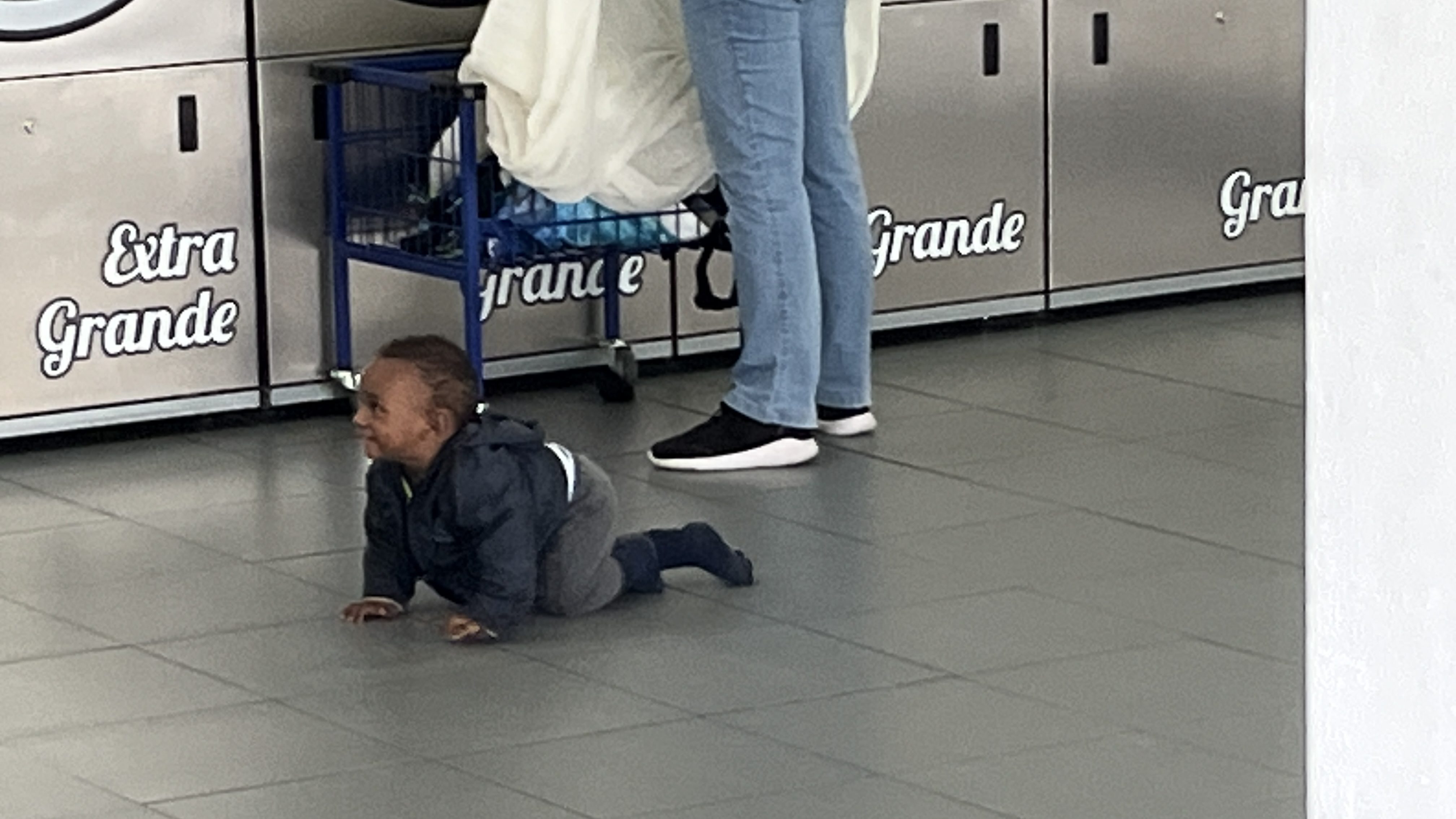
My timing is good – moments after getting my load in the last available machine, no less than a dozen people come in with sacks of clothes. One of them also has THE CUTEST little baby with her and I love to learn his name is João, the Portuguese version of ‘John’ – pronounced joe-oww. This little dude is laughing like the Buddha as he motors all over the floor. It’s absolutely contagious and I can’t suppress chuckling as I fold up my linens. Pure joy like this is usually only found in small children – soak it up whenever you can get it!
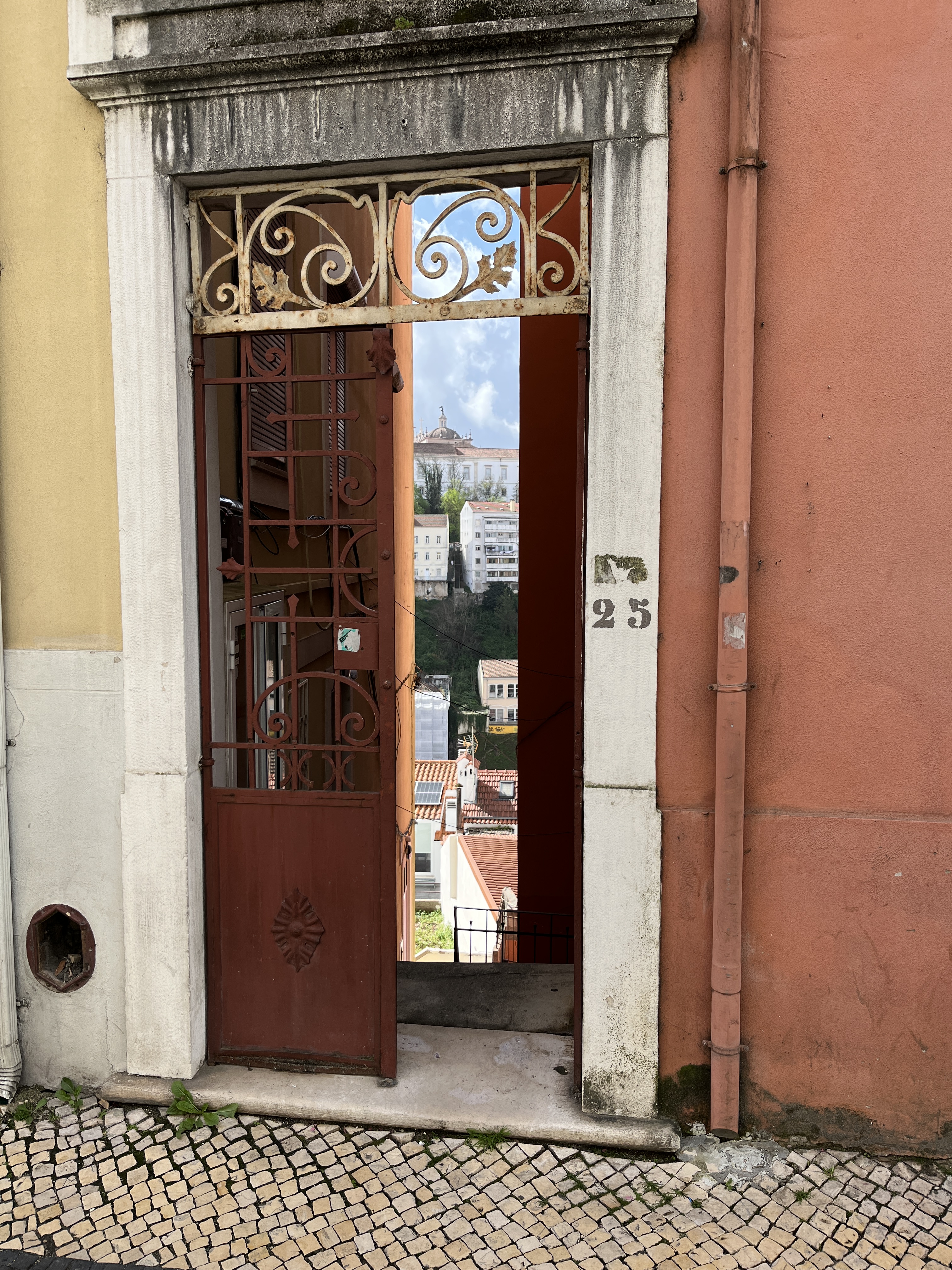
I consider how I can learn from this mini-master and give joy more freely as I follow the sloping streets back home, noticing the subtly beautiful architecture, glimpses of the valley peeking at me through gaps in the houses.
Oh yeah, I’m employed
On the way back, my vacation brain is interrupted by the rude and unwelcome intrusion of a work-related thought – a bit like when you’re morning alarm goes off and you hear it in your dreams and there’s that brief moment of confusion as you transition into consciousness. A sort of ‘oh shit, the pile of work I’ve been ignoring for the past 12 days is suddenly due… and due today… like in a couple hours’ kind of realization. I knew I was bringing my 2 jobs with me on vacation, but I’ve been doing my best to ignore them.
Sorry, Coimbra, we’ll have to parallel play today – Stasia in her watercolors, me on my computer, and you just being awesome like you does. We take care of our projects and plan one last hurrah tomorrow before we shove off to the next port of call.
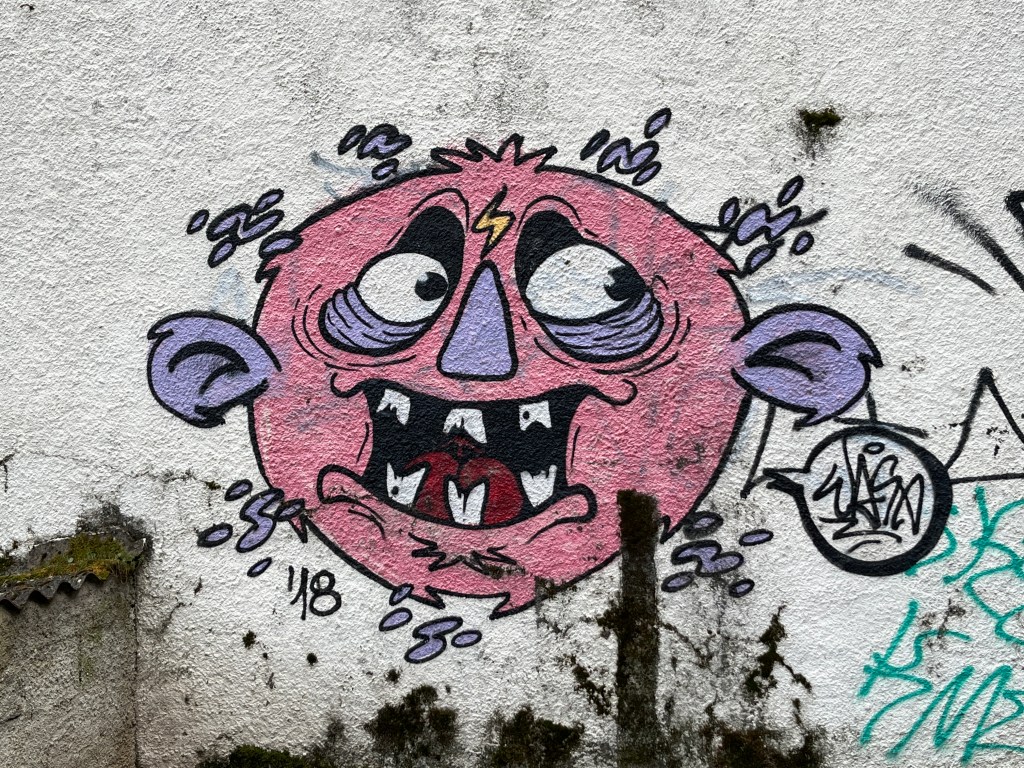
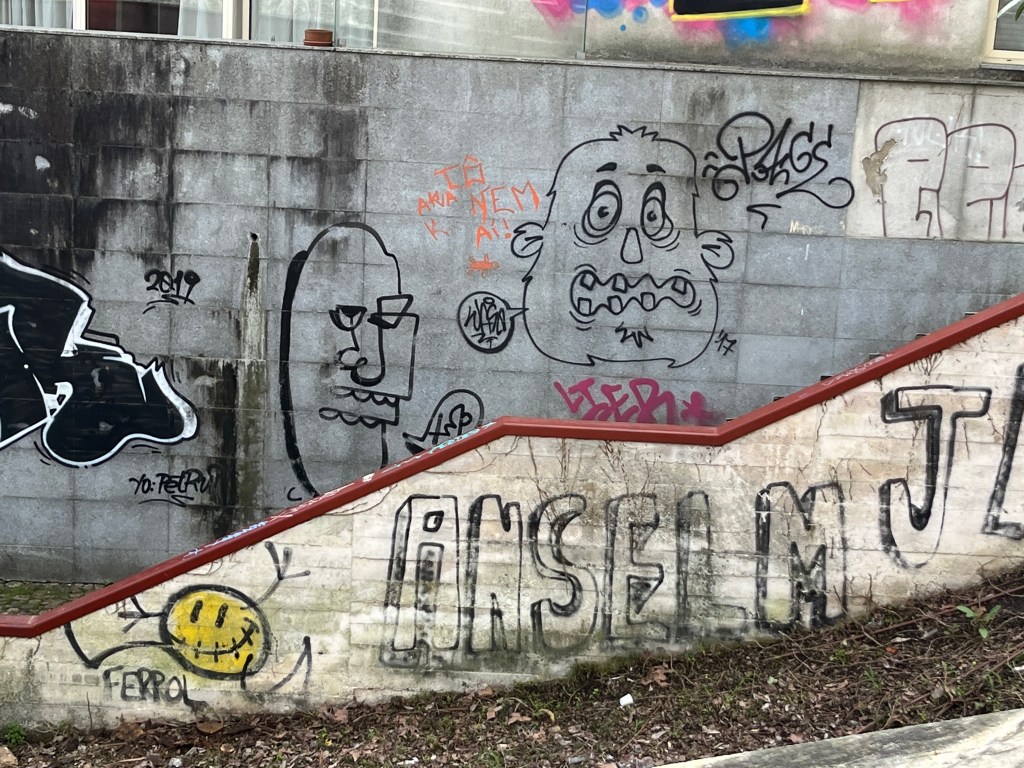
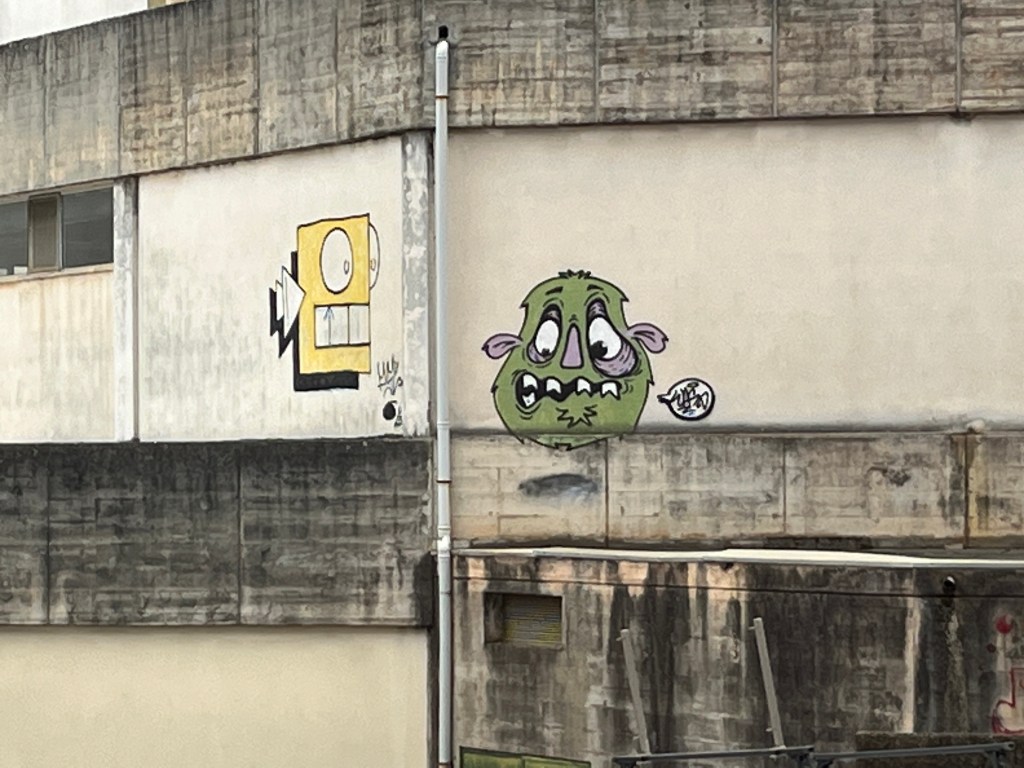
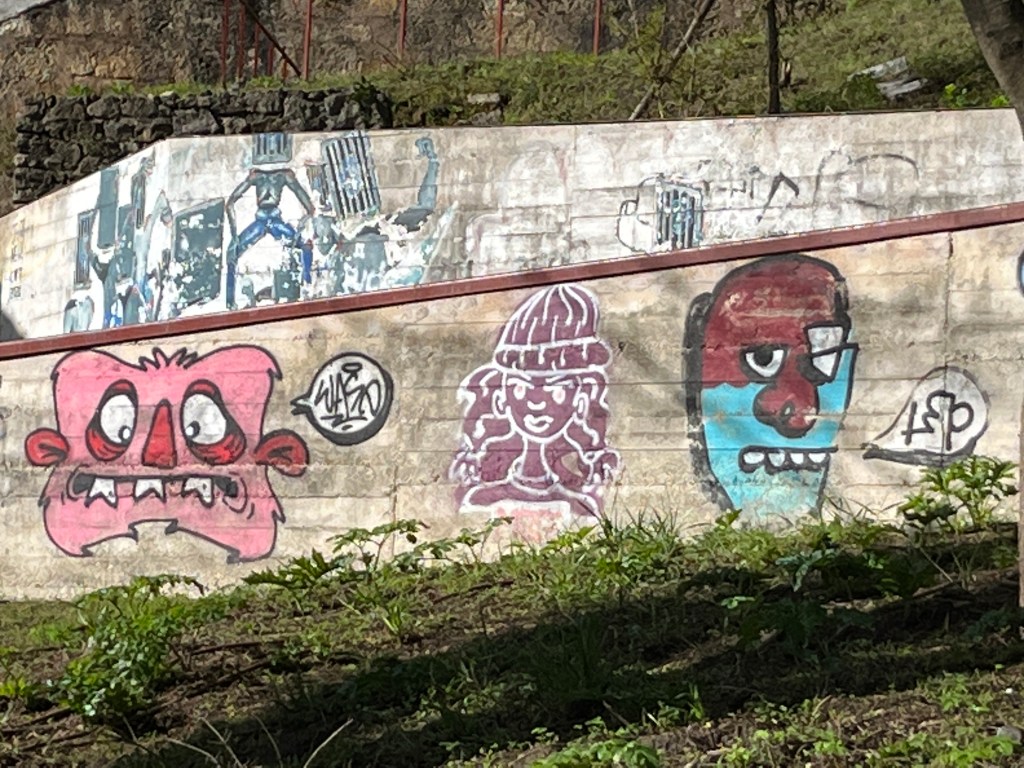
Unsigned street art
This artist’s imagery appeared in multiple places across town. We’re not huge fans of graffiti unless it tells a story or has some type of approachable aesthetic. This person had a cool style to be sure.
Universidade de Coimbra
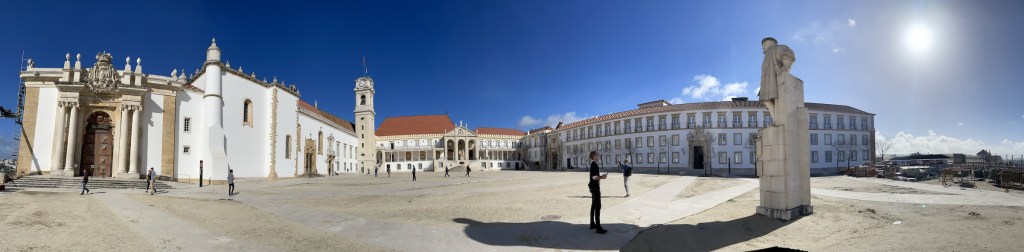
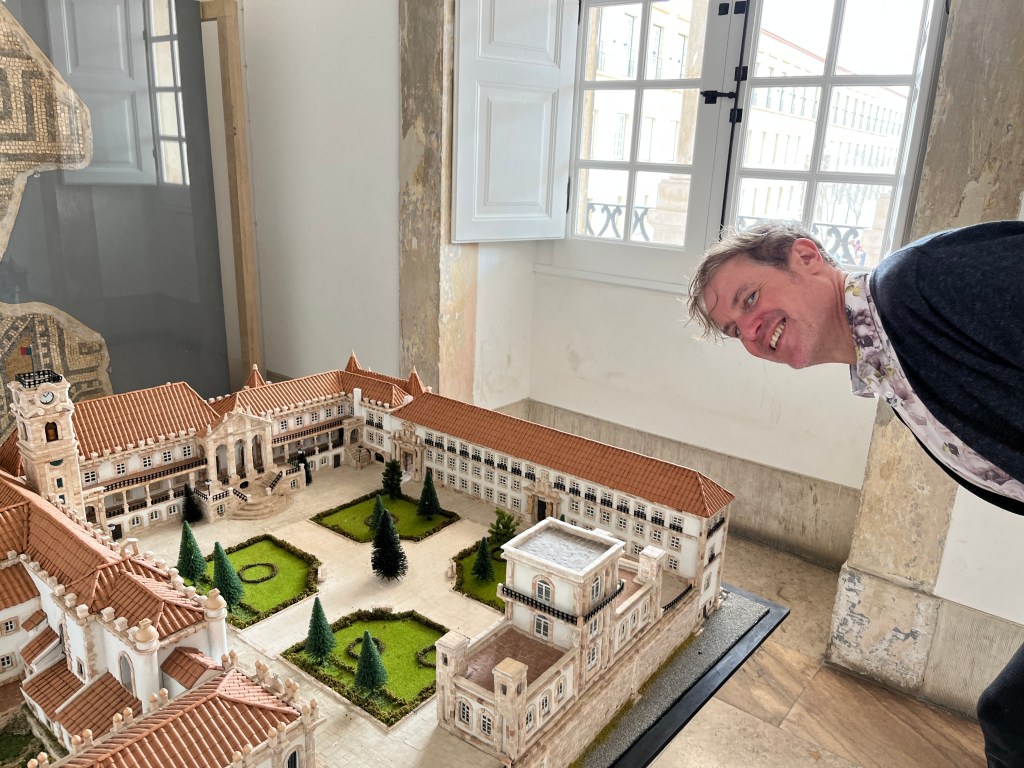
We decide to check out the university just a block down the street. As I’ve been trying to impress upon you, my long-suffering readership, it’s the world’s oldest and a UNESCO heritage site to boot. Established by kings who put education as the top priority (on par with religion), it has a palace and a royal library we cannot miss. We later learn that this venerated institution had a few locations in the early days, relocating because of war or royal whim – with it finding final and permanent residence in Coimbra’s royal palace.
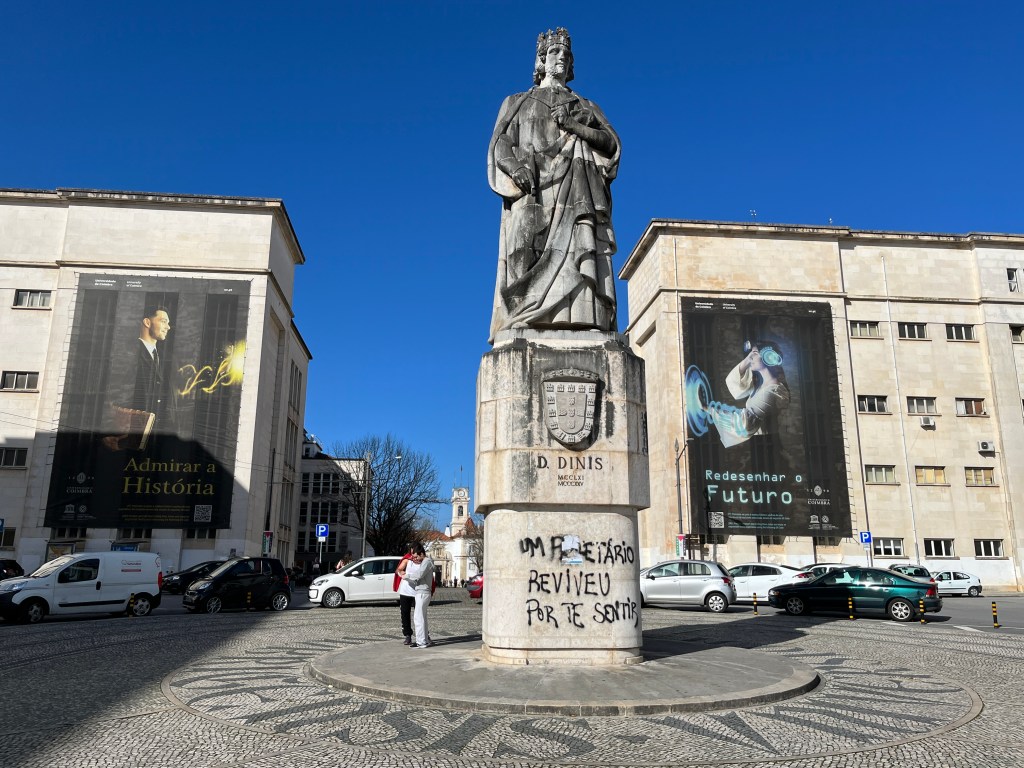
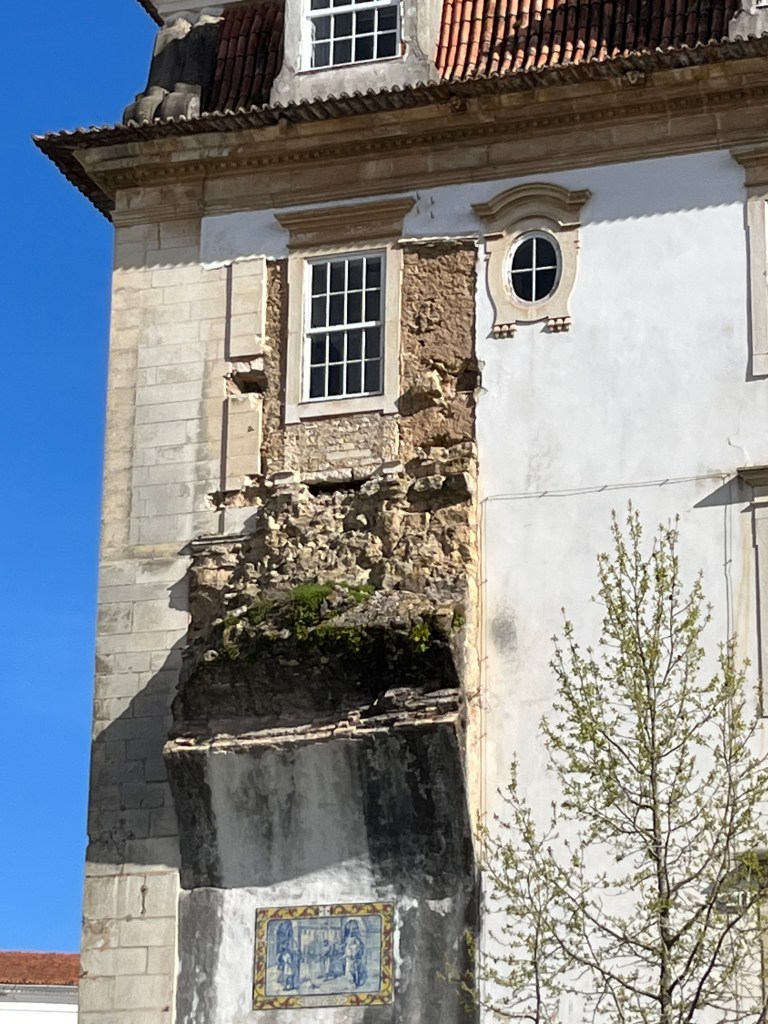
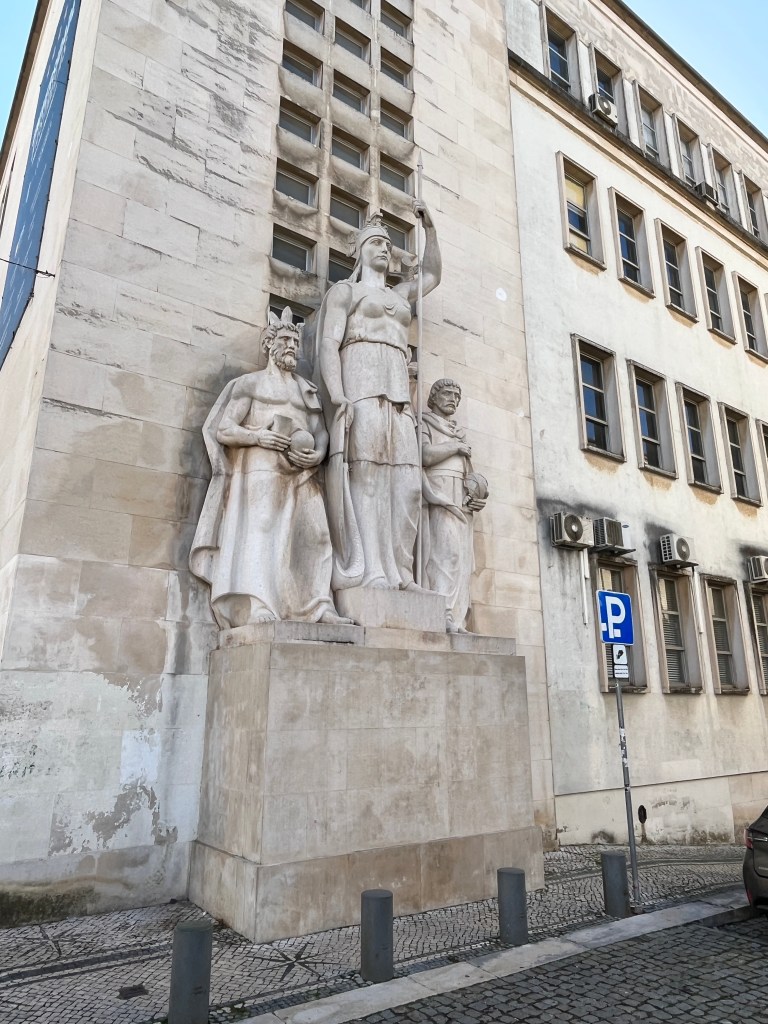
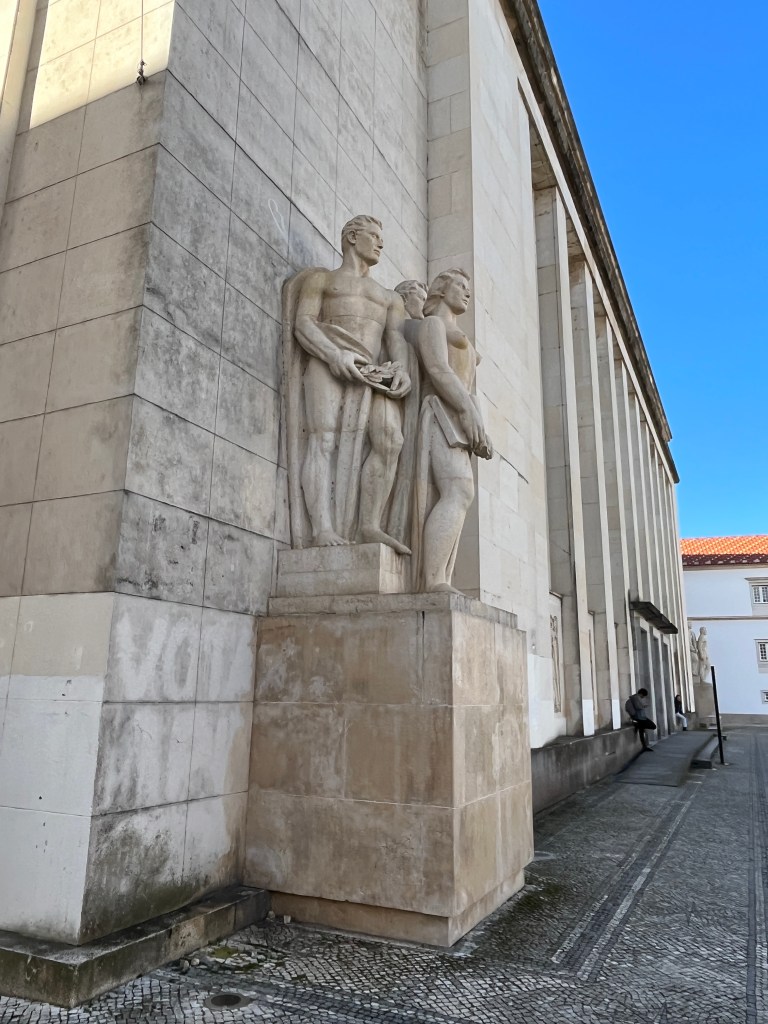
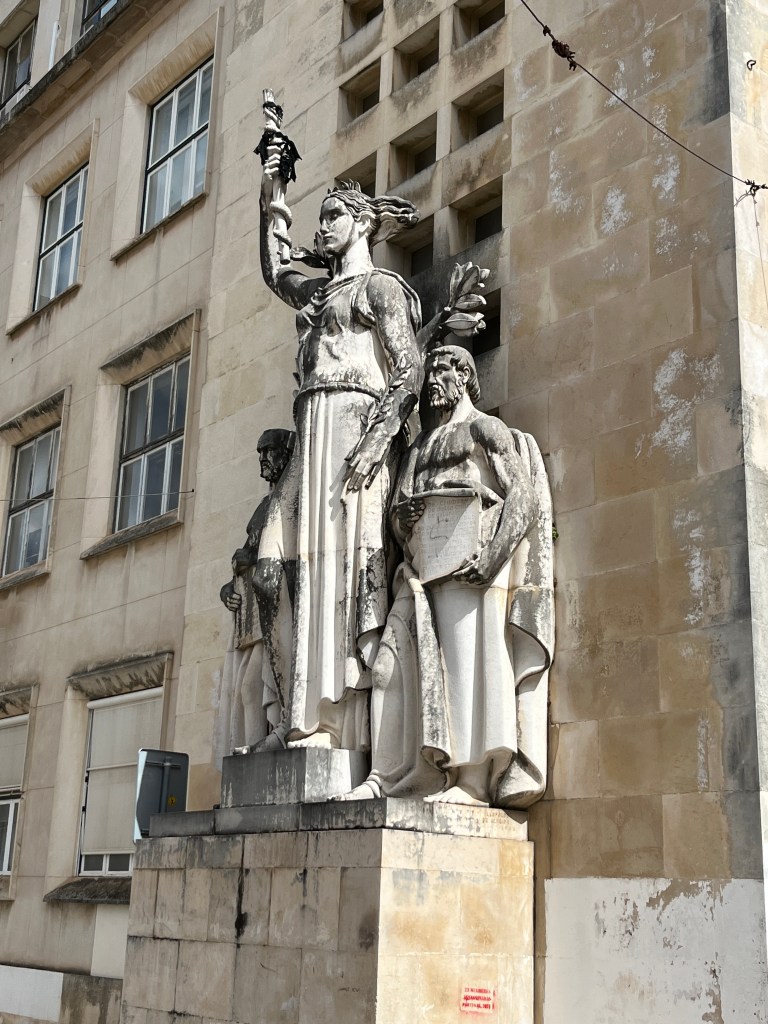
After a few flights of wide, stone steps, we’re delivered onto a large plaza, which is being watched over by King Dinis – or at least a 50-foot sculpture of the 13th-century monarch. Quite effective, this. His posture is stoic, wise, and welcoming despite the ugly spray paint (which we translated to say “The planet is revived through your feelings”). These buildings and the knowledge they contain are a gift from him to the world. Some of the towering statues about are in their birthday suits and we reflect that without education, we are naked. It is knowledge and curiosity that enables us to rise above, enrobing and protecting us – though to be fair, some types of knowledge and curiosity demand the absence of garments.
Biblioteca Joanine
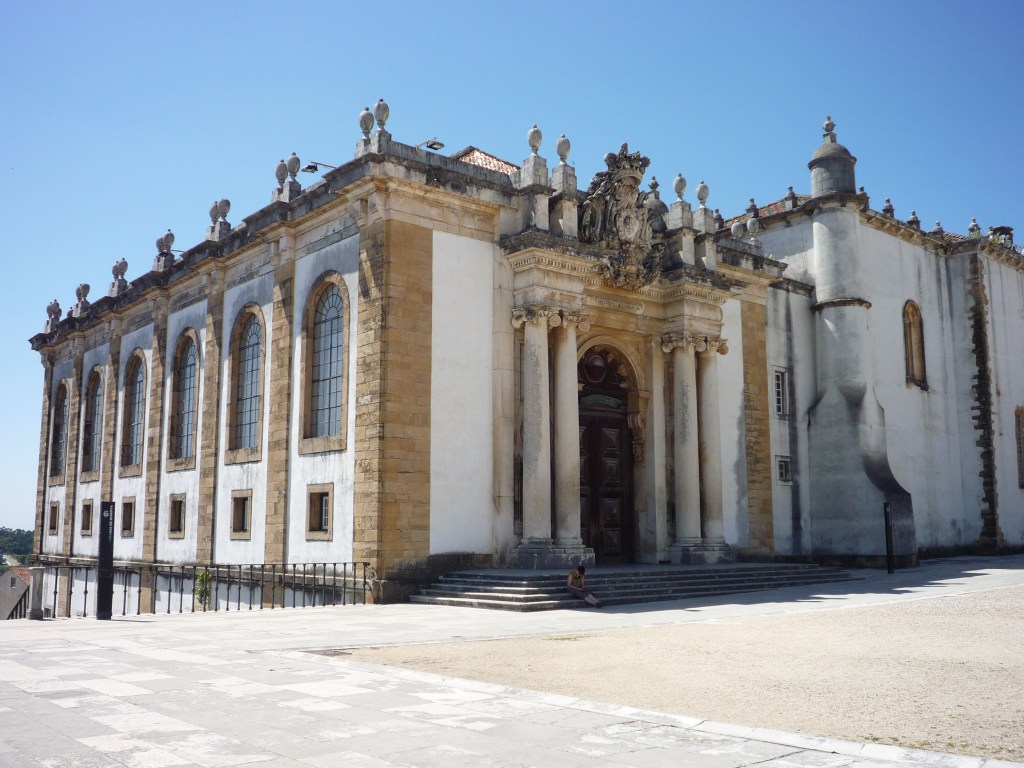
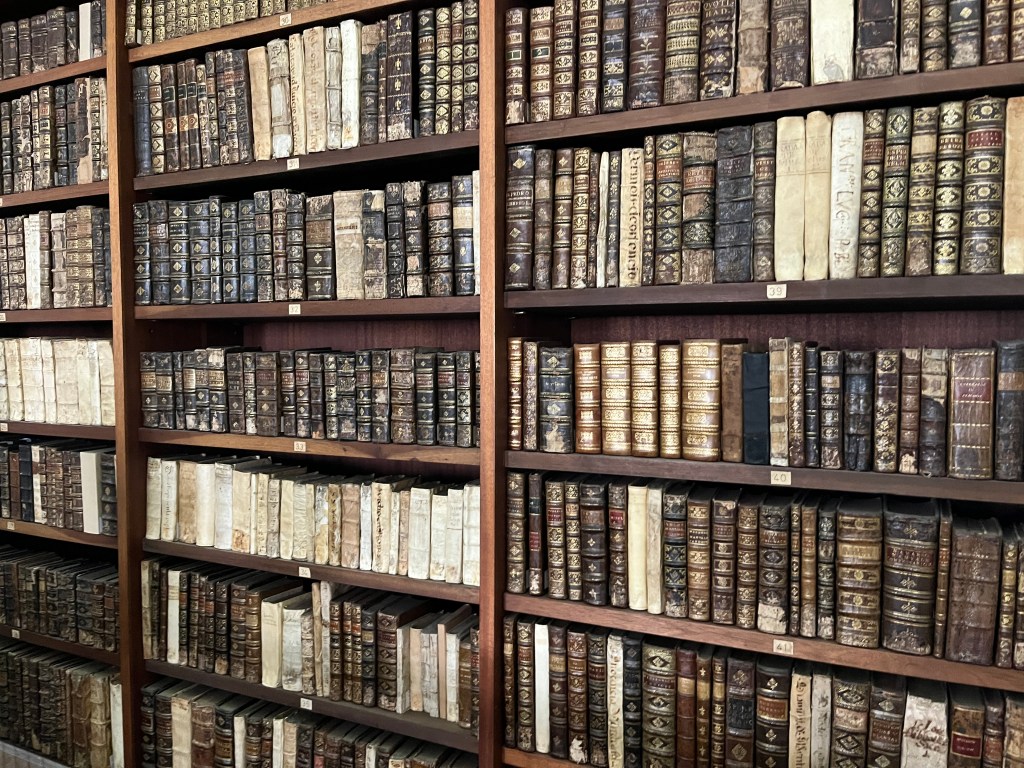
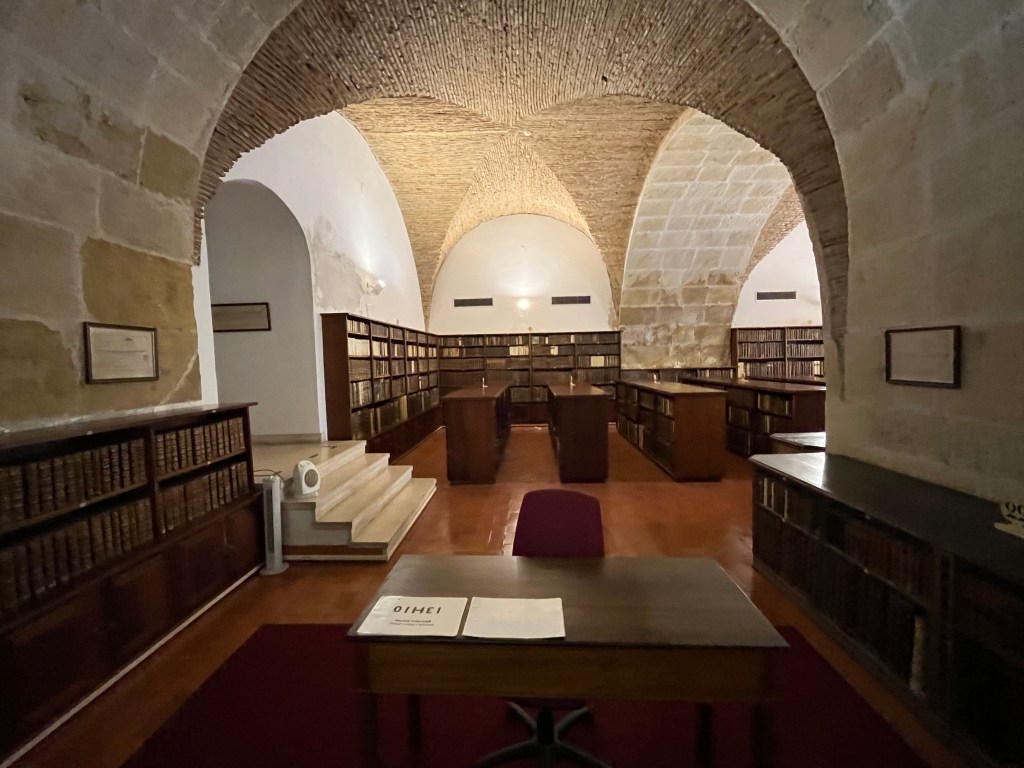
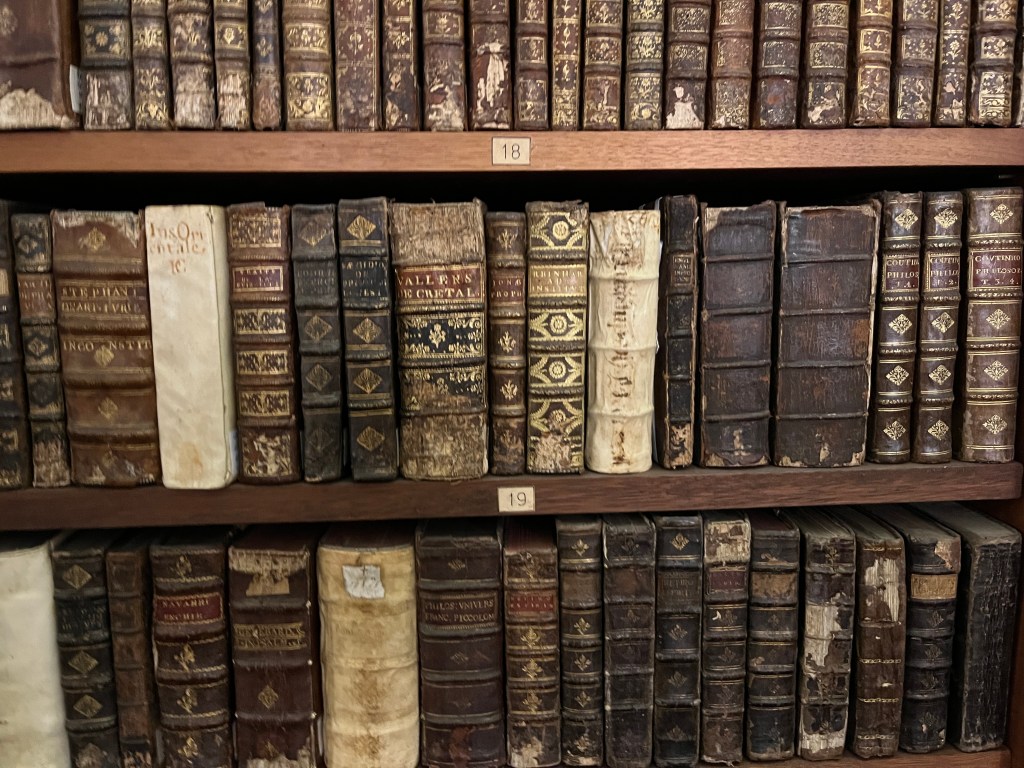
We have purchased tickets for various sights, but the most illustrious is definitely the Biblioteca Joanine (so-called to honor its founder King João V), regaled far and wide as the world’s most beautiful. It’s a book-vault actually, with really thick walls, and was built to protect its collection of no less than 60,000 ancient texts. It’s quite a delicate, highly-controlled environment. They only allow 60 people in a time for timed 20-minute visits, forbid photography and keep it all dimly lit – a few dapples of sunlight peeking in from massive drawn curtains.
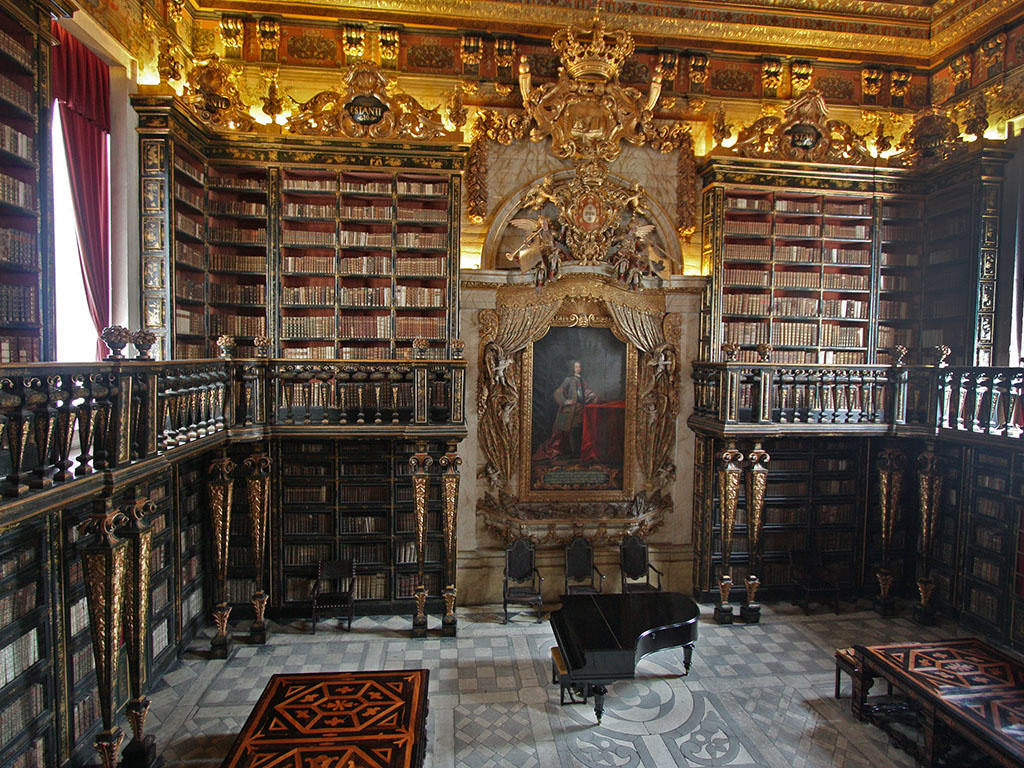
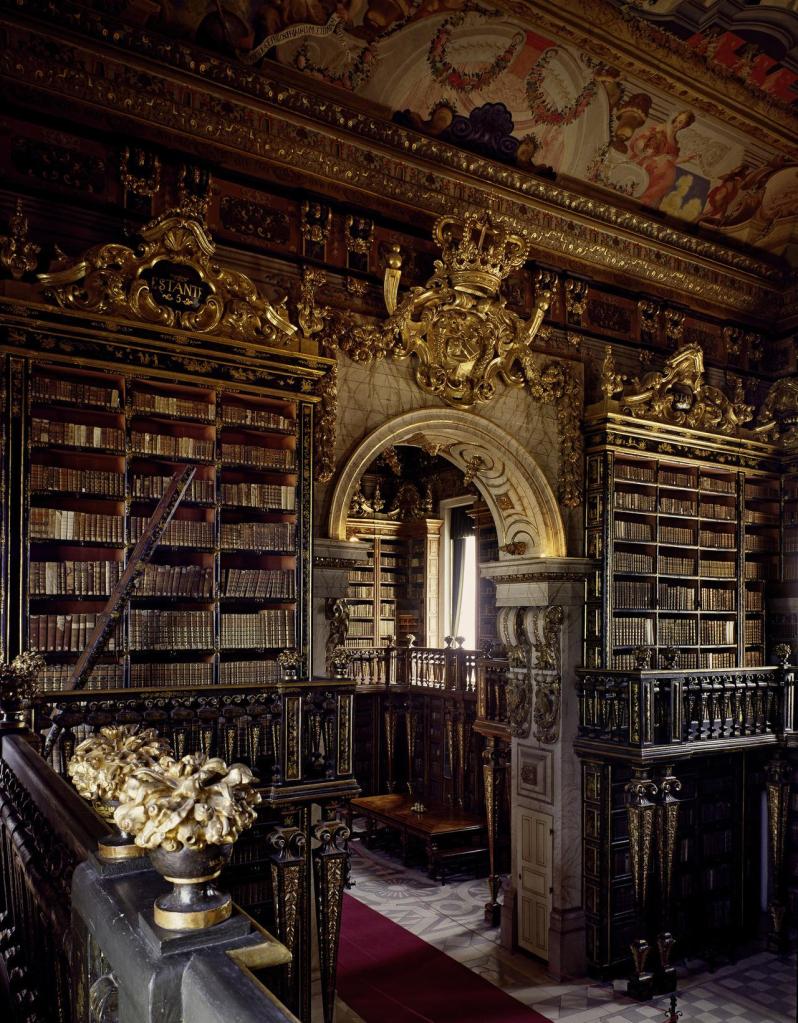
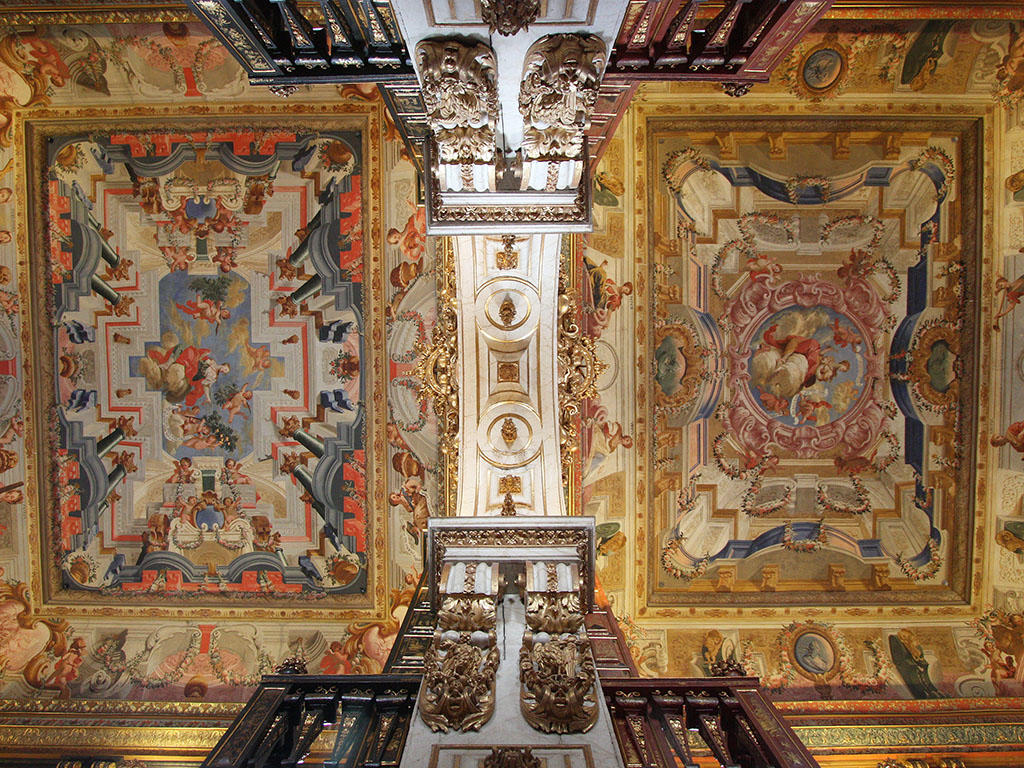
It’s exactly what you might imagine a royal Baroque library might look like – with frescoes and tapestries, gloriously ornate decorations on every tactile surface, miles of rich red velvet, Latin inscriptions touting the value of study and knowledge, massive mahogany tables, ladders and shelves, floors and floors of tightly packed volumes (all of which are being painstakingly digitized and shared with the world).
You might not expect the traditional Japanese imagery painted in gold on pointy black finials however, evidence of the strong trading relationship the two countries had in the old world – further proof: tempura is originally Portuguese (thanks António!).
But back to the Biblioteca. We’re further surprised to learn it was the standard university library for the first 200 years of its existence. It wasn’t just built for the pleasure of the king – students had full access.
As mentioned, it was designed to protect its inventory from the ravages of war, time, and decay – and to that end, a colony of bats has lived in the library for centuries keeping the insect population down. As for any larger threats, the 2 legged variety for example – there is a prison located two floors below. Ancient universities had autonomy over their grounds, able to dole out justice and punishment in order to protect their students and teachers, and apparently books.
Out in the main square, a robust statue of the founder looks on, a bit worse for wear as the centuries have given him a decided scarecrow look.

Chapel of São Miguel
Named after the Patron Warrior Archangel Michael (after the fashion of its founding warrior king, João V), this relatively small but well-adorned chapel in the Manueline style is still in use today – we nearly missed our chance to see it due to a scheduled funeral service. Here, we gazed at the boggling detail and lingered until the rest of the crowd dispersed, leaving just us and the attendant. On further inspection, and with the expert guidance of João, we found many absorbing nuances. As you might have guessed by now, the name João is pretty common. Just like its western counterpart, you can’t throw a rosary bead without it bouncing off an owner of this old testament namesake.
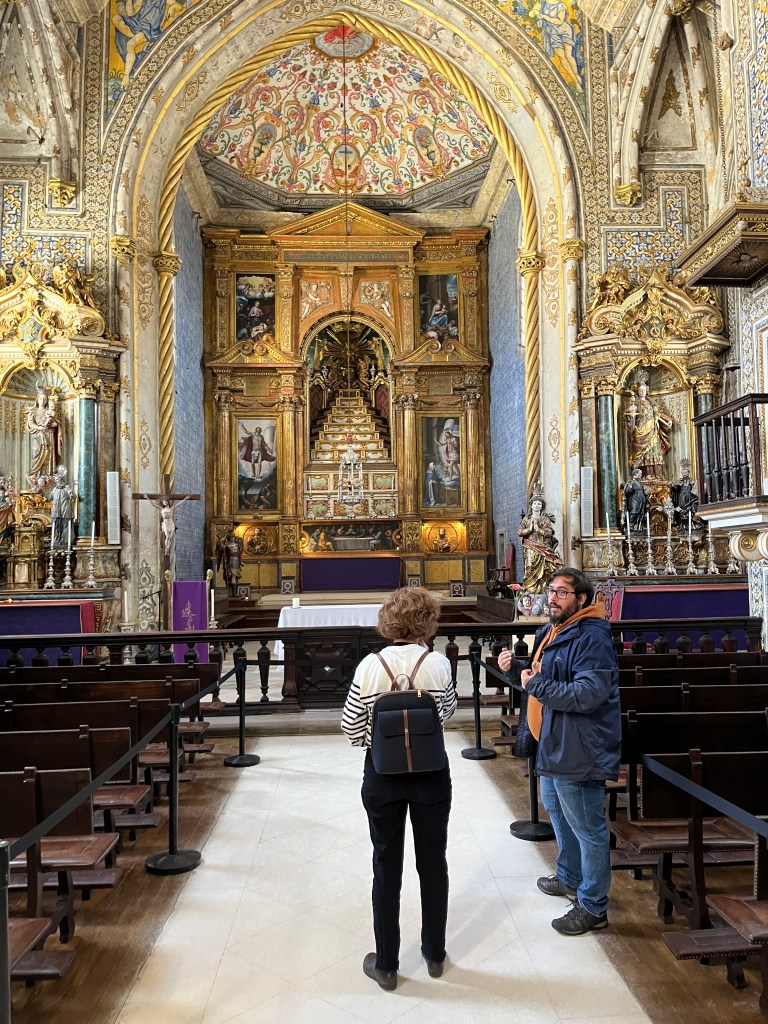
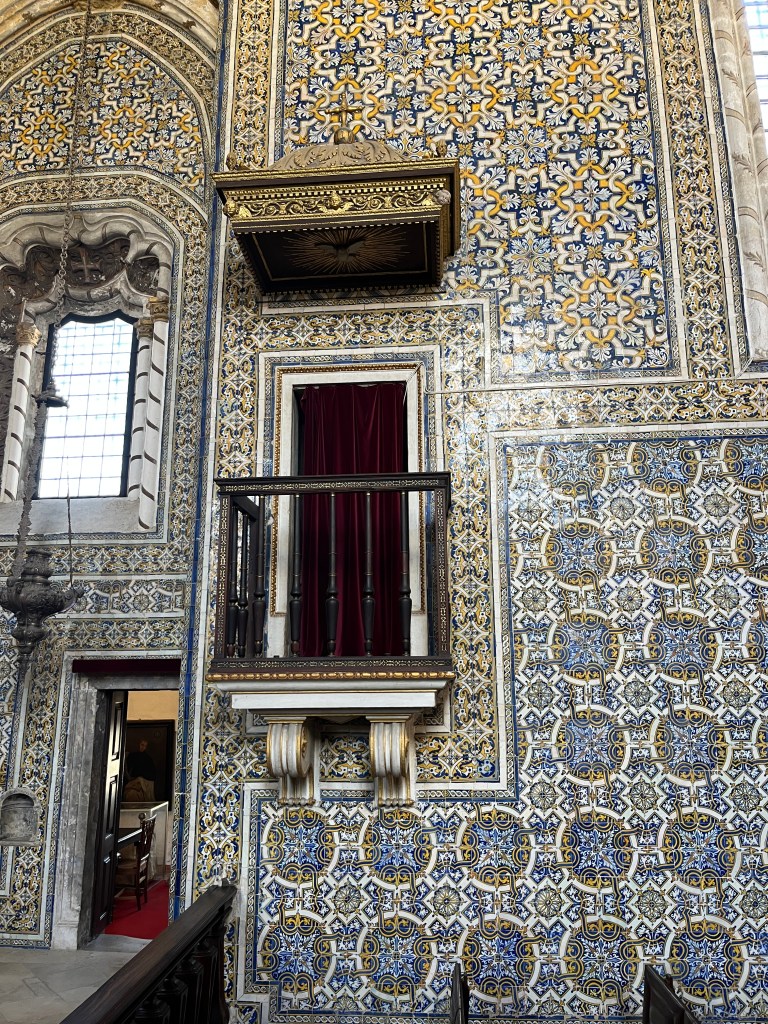
There was a box poking out of the side wall where important guest speakers would make appearances and orate – like the radical St. Augustine who openly advocated for equality of all mankind (emphasis on the first 3 letters) under the eyes of God, not a very popular concept at the time.
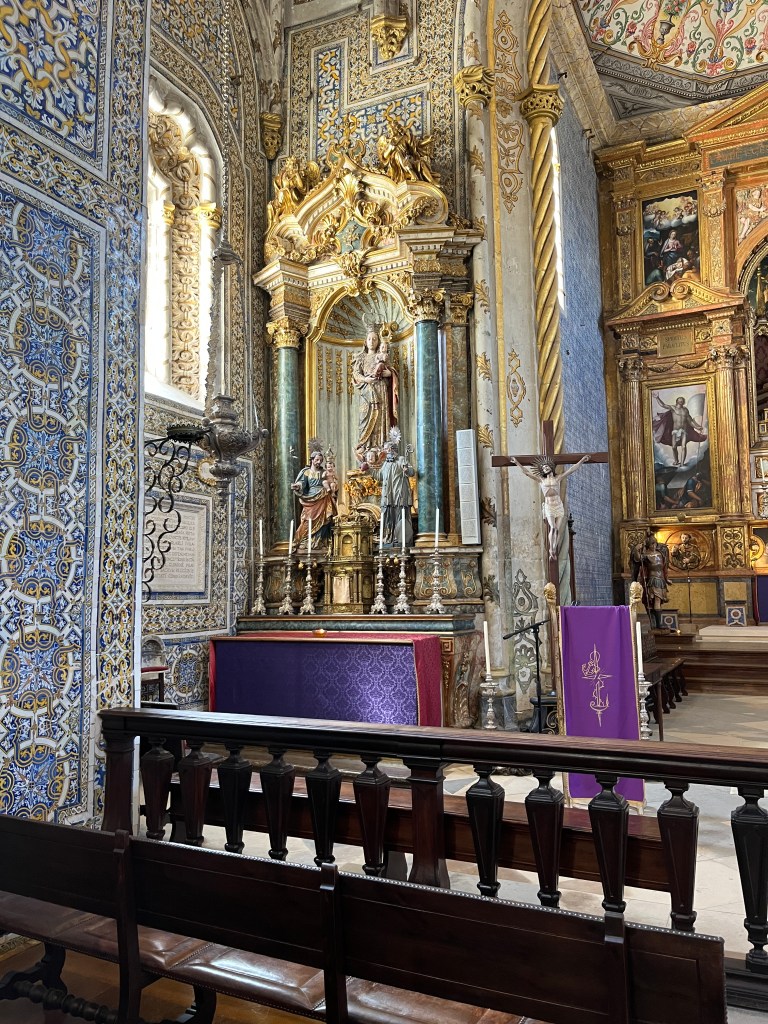
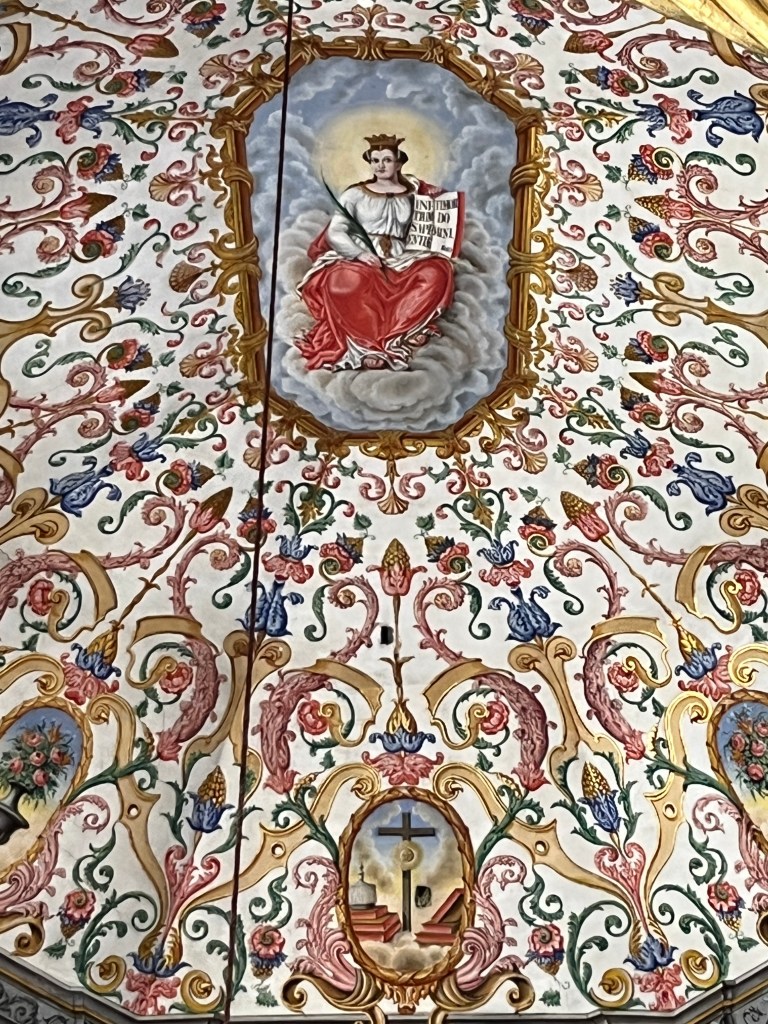
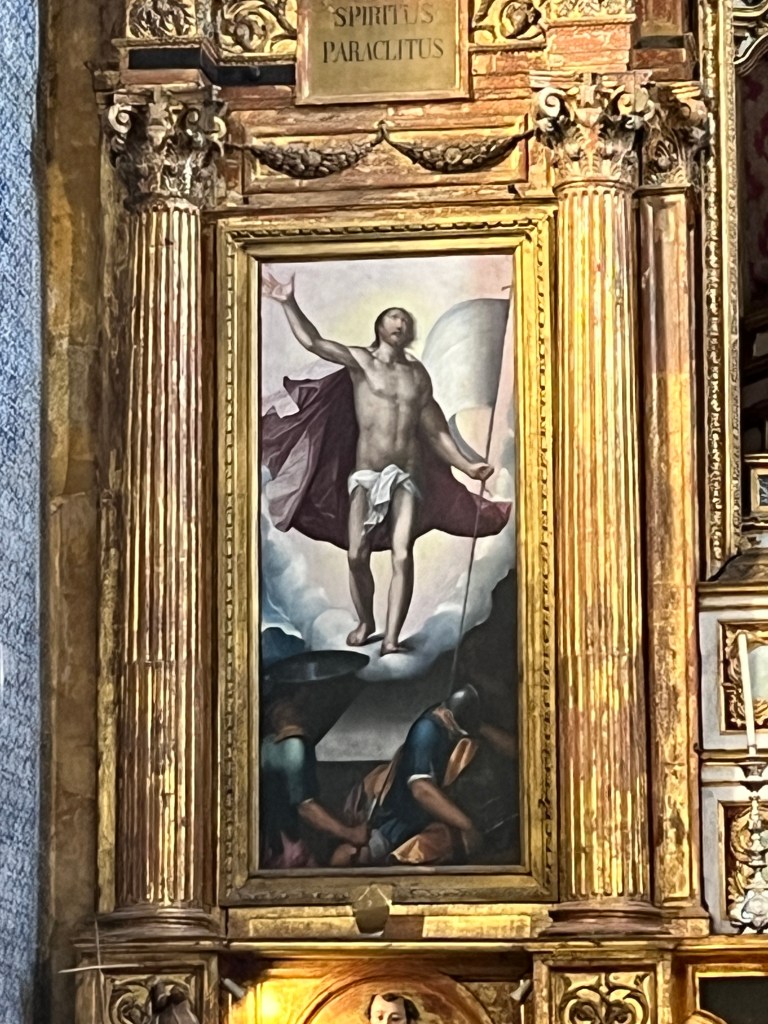
There was a set of progressively smaller rectangles in the center and I postulated they might be a ‘stairway to heaven‘ – which João confirmed (I hope they got permission from Led Zepplin first), and said it’s also called Jacobs ladder. The Saint of Education, also known as ‘the lady of light’ was well represented in sculpture and painted form – the former having a rather large crown on her head which our guide told us was done by the founder to prevent any future king from thinking he was above the institution of knowledge. The stylized depictions of the big J had him holding white flags and the only crucifixion symbol was very small compared to everything else.
The ceiling’s decoration emanated from a central image of Santa Luz (saint of education shown at the center of the universe) with four central tenants on each side: religion, papal law, secular law, and science/medicine.
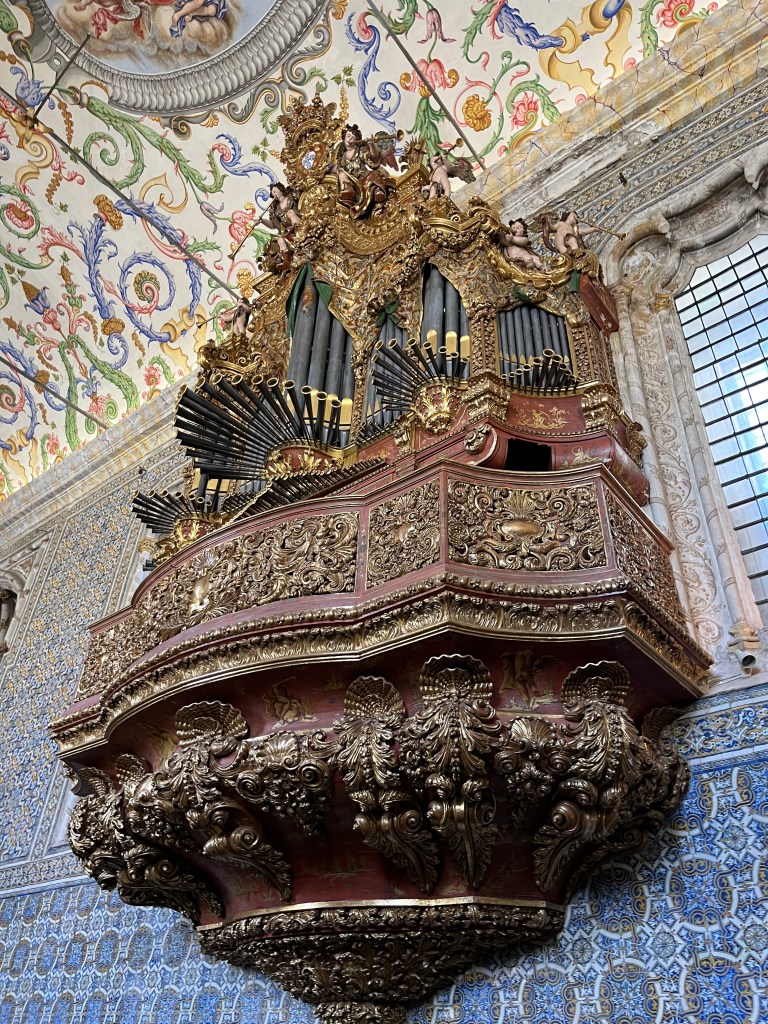
I wondered if the (almost ridiculously ornamented) pipe organ, which jutted out from the wall wasn’t perhaps a bit painful on the ears – its 200 horns having nothing but tiled walls and floors to ricochet off of.
All in all, I was impressed with the storytelling. As lofty as the themes were, the whole place was small and accessible. There was an absence (or at least minimizing) of the whole ‘he died for your sins you miserable rabble‘ quality that mars my experience of old (and new) world Christianity. Don’t misunderstand my disparaging view of the church or unconvincedness that Jesus actually existed as a negative commentary on the teachings associated with him. By and large, they appeal universally regardless of any particular brand of theology and I’ve long been a practician. It’s more the idolatry and thick morass of dogma and doctrine that have been heaped on top that I detach from. I think the song Jesus Christ Pose by Soundgarden sums it up the vibe.
But this isn’t the place for a disquisition and these views are my own. Stasia has her own experience and opinions. We see eye to eye on spirituality, the differences being mostly nuances based on the way we were raised.
Alcaçova Palace
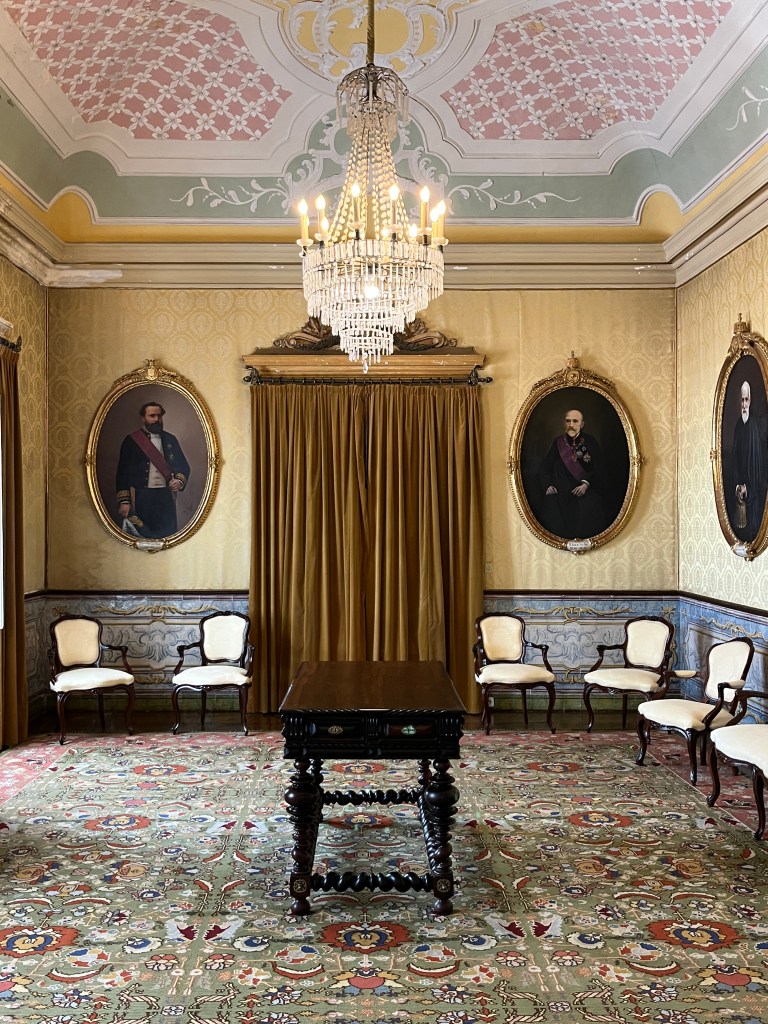
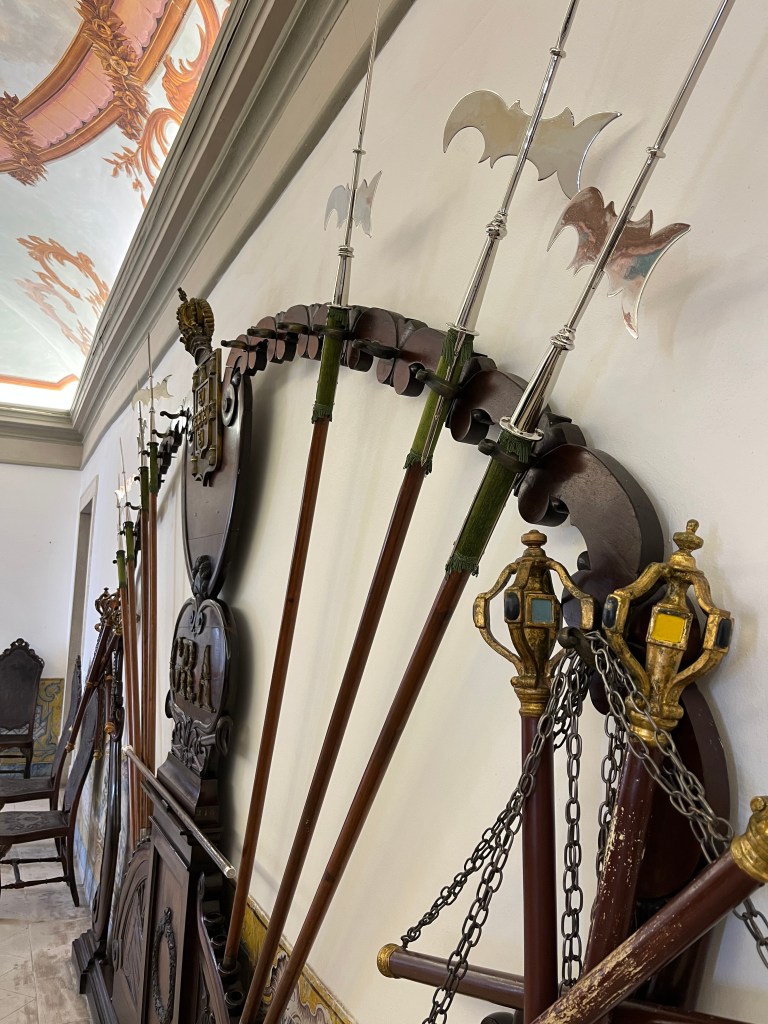
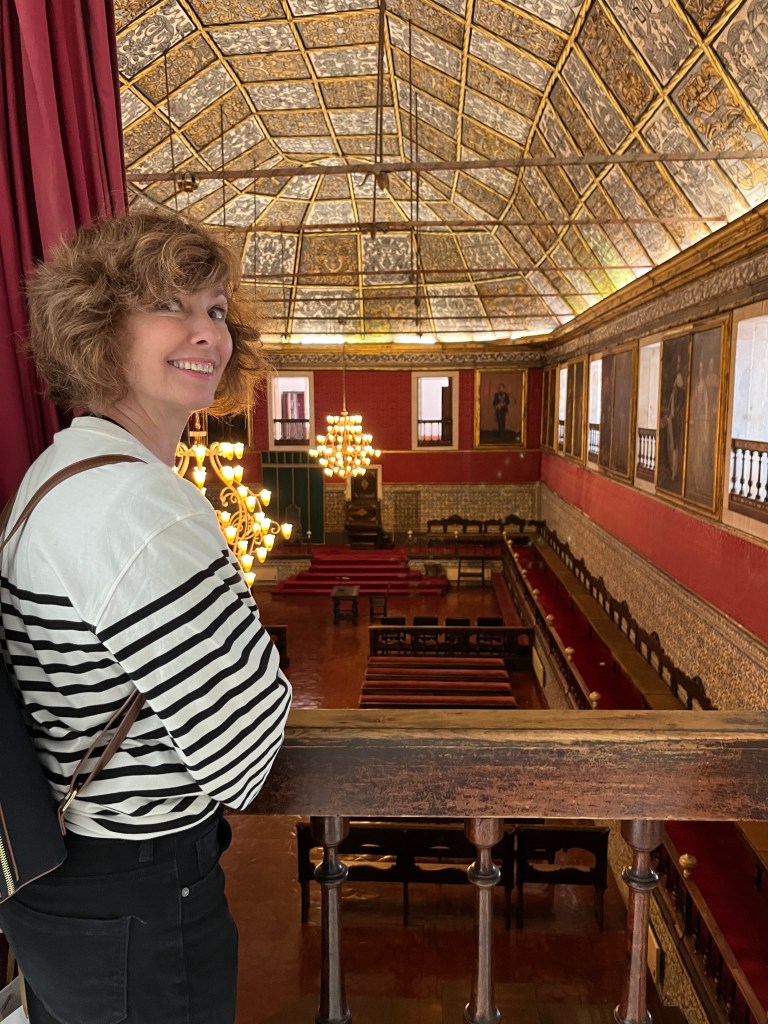
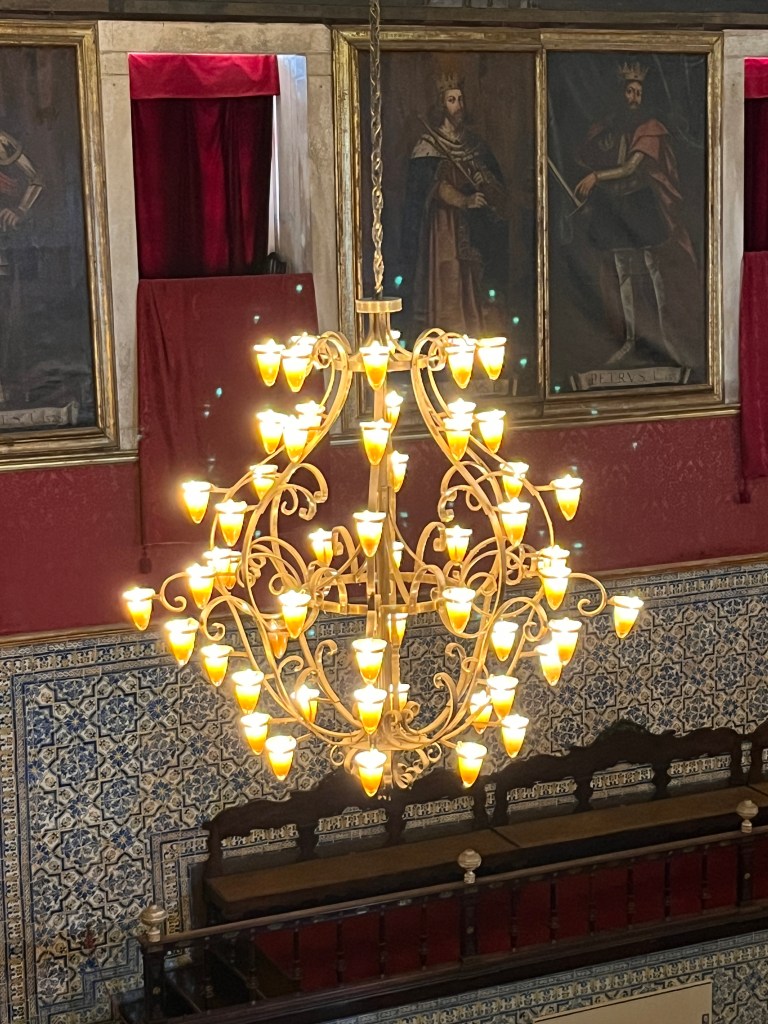
Once a royal palace, later a place for Illuminati tongue-wagging and pedagogical pretensions, there were a few areas of interest that caught our eye. The throne room was quite resplendent having been the place for many a kingly coronation and gradoise academic ceremony. The ceiling in particular was fascinating – completely covered with illustrated panels depicting grotesque maritime monsters of old – serpents, leviathans, and mermaids.

Exhale Coimbra, inhale Alentejo
Our brains are so full at this point – we can’t possibly go see the Cabinet of Curiosities or the Chemistry building (also on-campus sites that are part of our admission). It would be like trying to eat right after a feast. We find our way back to the car, now packed and ready to deliver us to our next adventure – the coastal province of Tavira, with about 5 hours of highway in between.
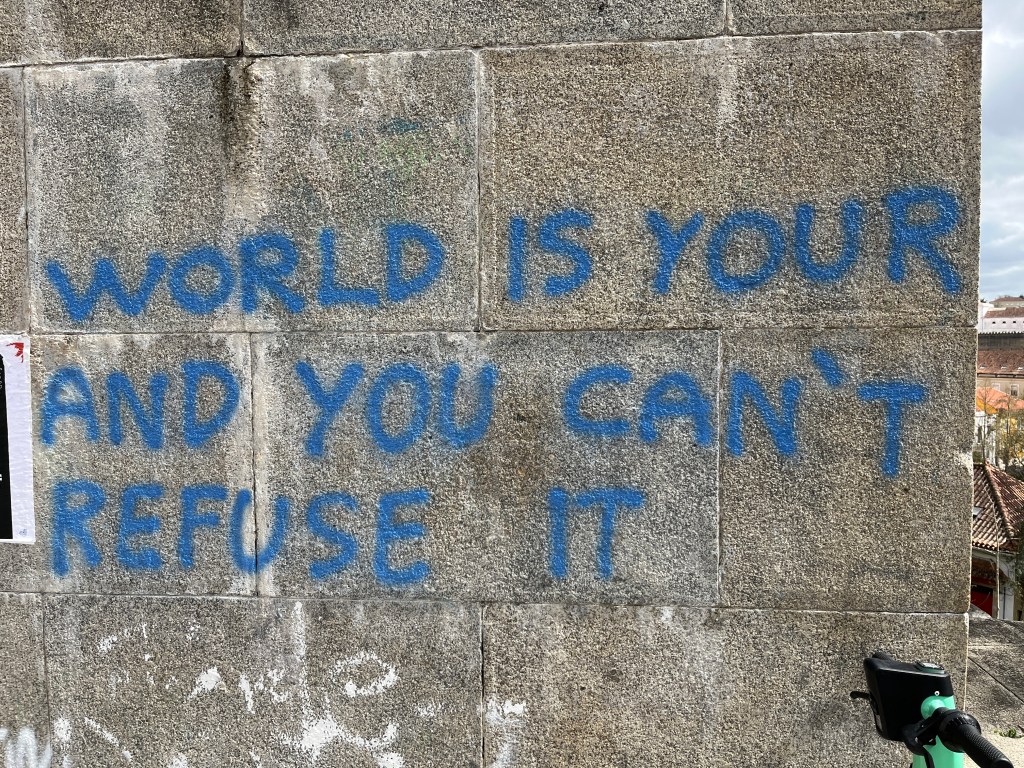
On the way out, there is an unsightly graffito that actually has the most poignant message. We translate it to: The world is a gift you cannot refuse.
Strange lands of the distant south
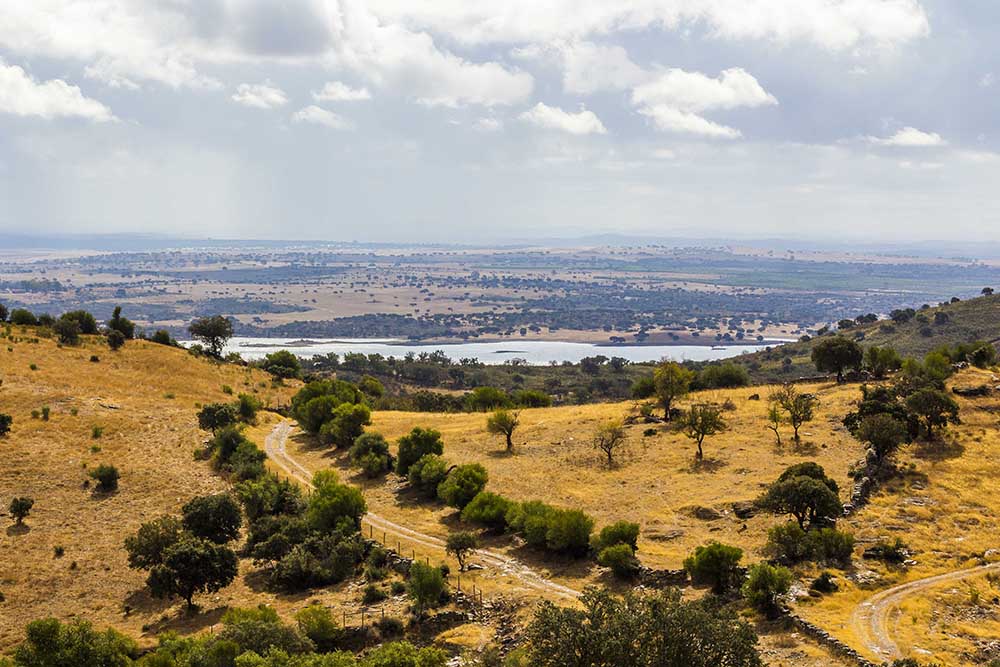
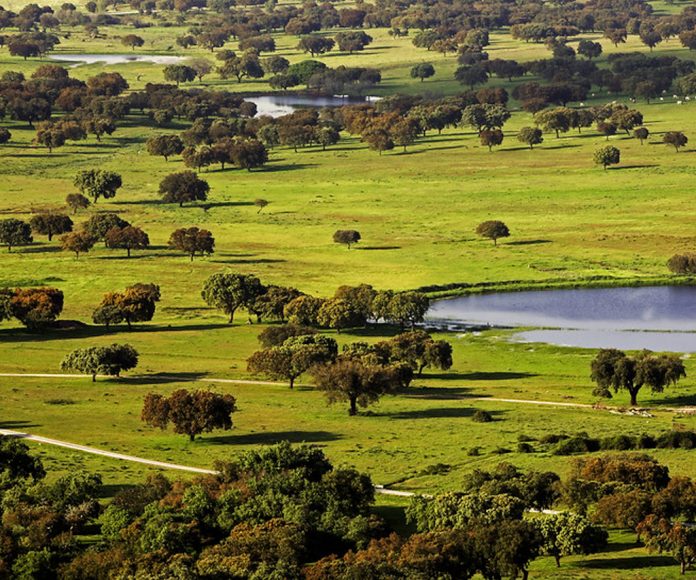
Once we get out of the greater Lisboa region, we enter the magical Alentejo. It’s markedly different – sparse with wide plains and gently rolling hills with occasional hints of the granite earth poking through. Every so often we see grazing livestock but no other hints of civilization. The trees dominating the landscape are new to us – they evoke exotic lands, sinewy Mediterranean shapes, and African desert canopies. We later learn they are stone pines and two types of oak: cork and holm. This is the world’s cork oak growing region and we observe so many of them being farmed for their bark in a sustainable way that doesn’t kill the tree. This vast vista is very agreeable to us and as lovers of the desert, we feel it’s as if the whole region had some of the best attributes of all the forested areas we’d been in before.
Tavira at last
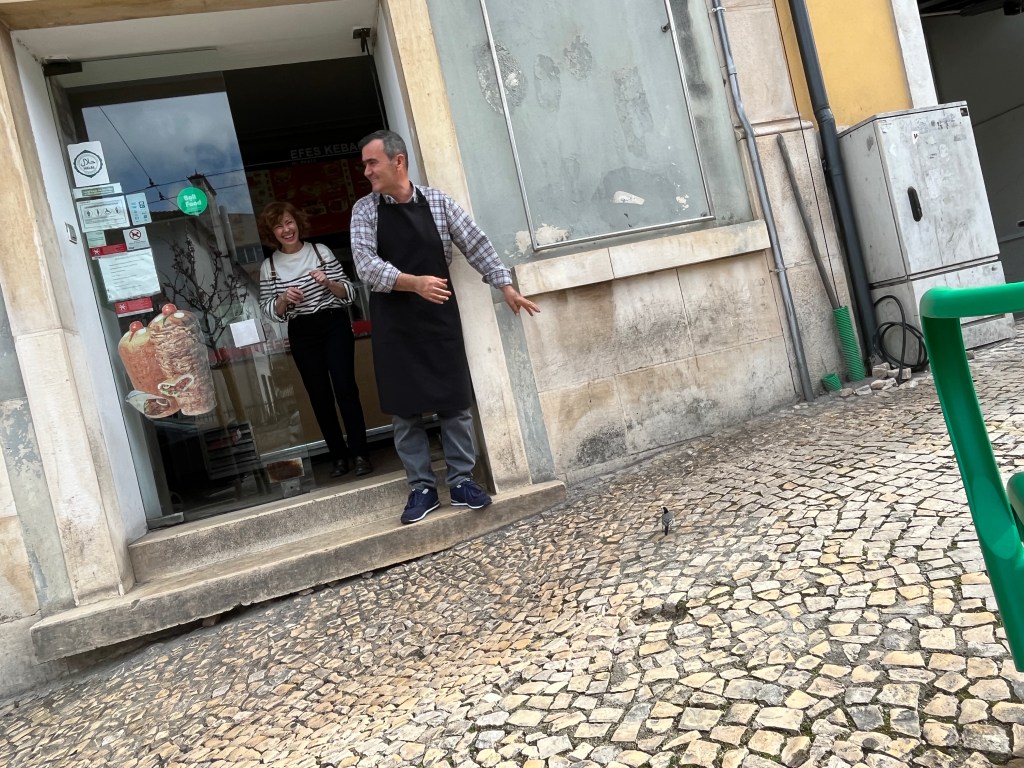
We pulled in with just enough time to be greeted by our host and for me to get my computer up and running for two back-to-back meetings, which are a bit hairy due to the sluggish internet. Stasia recommends I use my cell signal which saves the day. We end our big day sharing plates of wonderful Halal kebabs, fries, and salads we’d picked up in Coimbra before heading out.
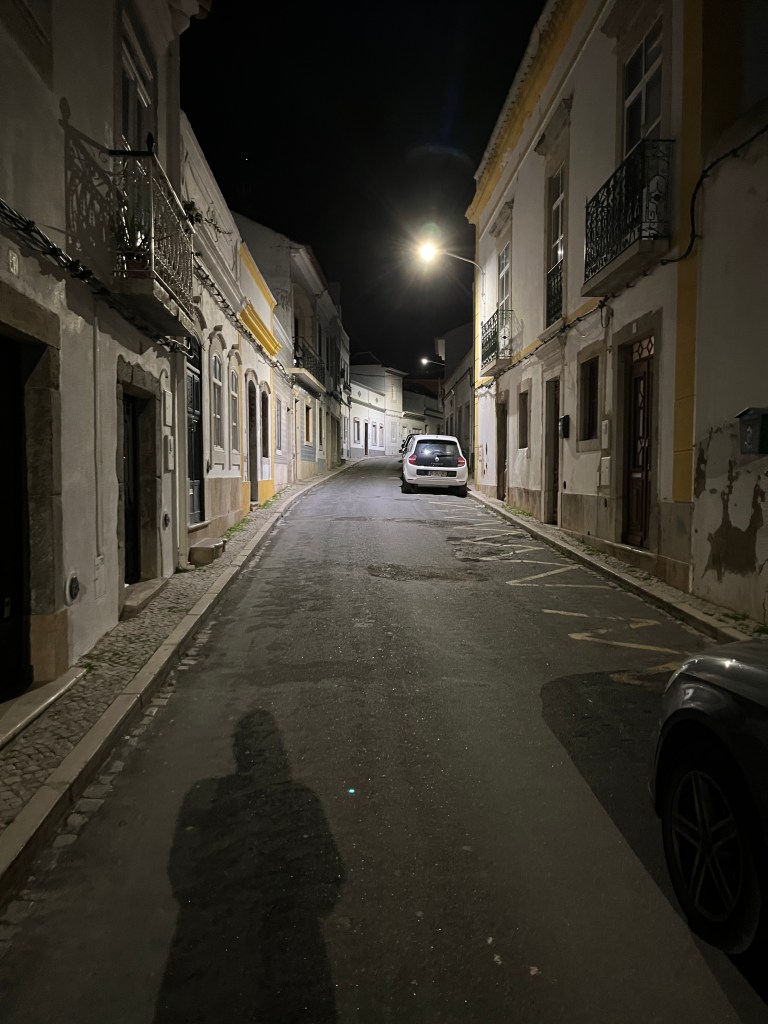
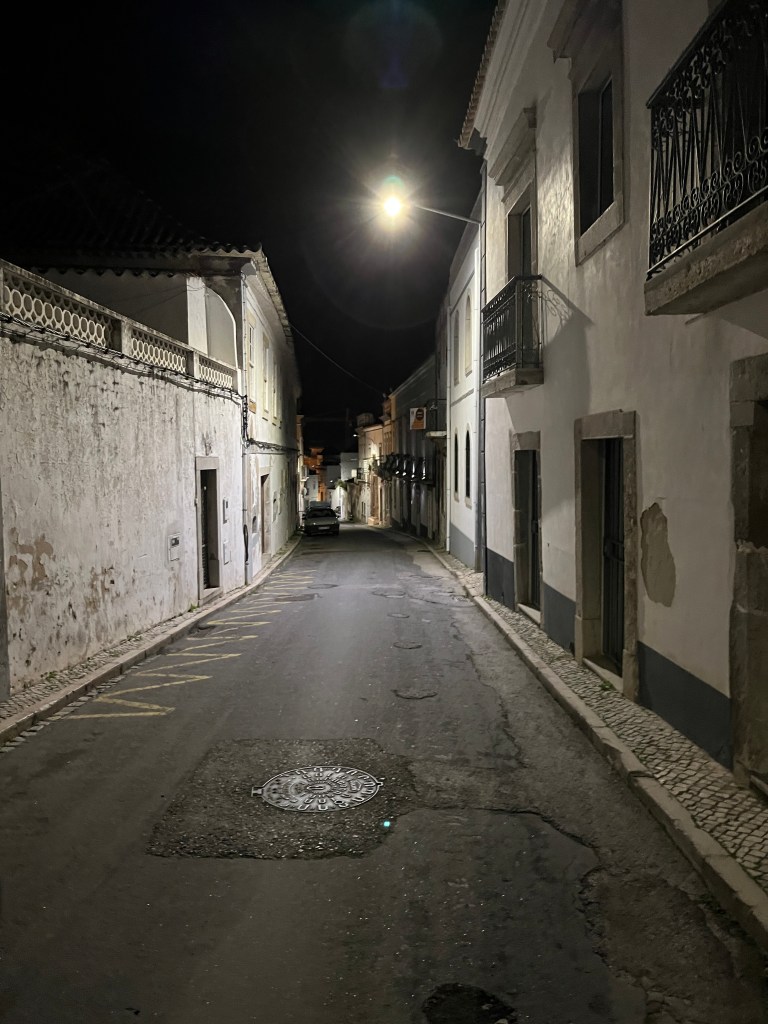
I go outside after dark to get the last of our stuff and to make sure our side mirror is turned in. This street is NARROW and you better believe unretracted side mirrors have slim chances out here. This is definitely old town!


 The Itinerant Three TnTs
The blue and gold tiles on the walls outside the university at Coimbra – are they a Moorish design? They are gorgeous and I’d like to make a quilt using those colors.
LikeLiked by 1 person
I think you’re referring to the tiles inside St. Michaels Chapel. The style of the chapel’s architecture and interior is Manueline – a short but really exciting period of Portuguese history – during the age of discovery – and pulls in all the influences of the new worlds de Gama traveled to. Definitely alot of Moorish/Islamic influence. Check it out: https://en.wikipedia.org/wiki/Manueline
LikeLike